Crown reduction, done to growth points.
Reducing a crown means taking the whole outline in evenly and finishing each cut at a growth point, so the tree keeps its shape and seals properly.
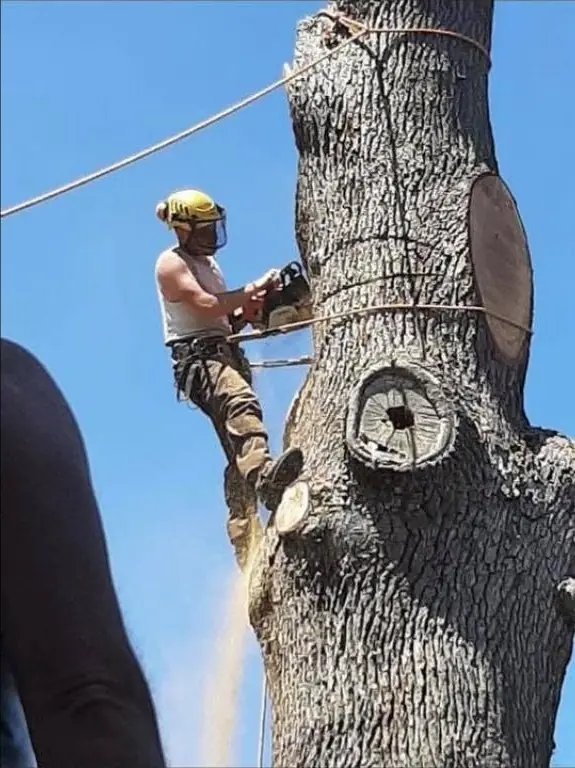
Reducing a crown means taking the whole outline in evenly and finishing each cut at a growth point, so the tree keeps its shape and seals properly.
Both make a tree shorter. The difference is where each cut stops, and what the tree does afterwards.
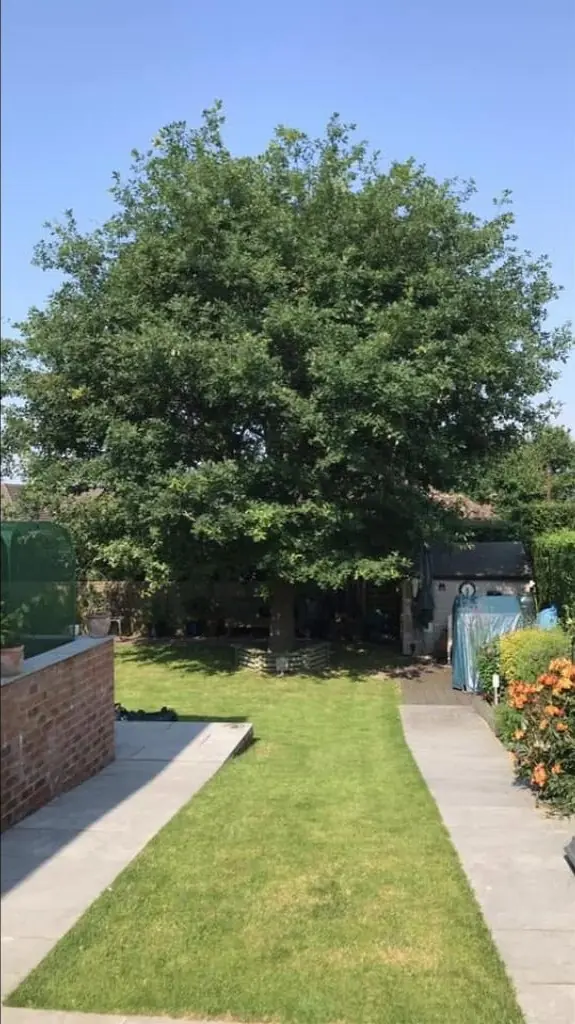
Usually light, sometimes weight, occasionally a surveyor.
A reduction with a thin takes the edge off without leaving you a bare stem in the corner.
Taking the lateral spread back off a roof or a gutter, rather than removing the tree.
Long horizontal limbs on a mature tree carry a lot of weight. Shortening them reduces the leverage.
A survey or a mortgage query naming the tree. Bring us the wording and we will quote to it.
A forest tree in a small garden will never be the right size. A reduction on a cycle keeps it workable.
Often the cheapest way to settle it, and better than a one-sided cut back to the boundary.
Send a photo of the tree from the house. We can tell you what a reduction would take off it, and whether it is the right answer at all.
A reduction takes the outline in all round and finishes each cut at a growth point, so the tree carries on from there. Topping cuts the crown off at a height and leaves stubs, which cannot seal and throw out weak regrowth. Topping is quicker and cheaper on the day and costs more over a decade.
Most healthy trees take fifteen to thirty percent without complaint. Beyond that you are removing a lot of the leaf the tree feeds itself with, and it reacts by growing back hard. We will tell you the figure we think the tree will take rather than the figure you ask for.
Depends on the species and how hard it was taken. Three to five years is common on a vigorous tree such as a lime or a willow, longer on an oak.
Right after a winter reduction a bare tree looks smaller and more open, because it is. Come the spring flush it reads as a well-shaped tree. We would rather show you a photo of similar work before you book than have you surprised.
Most jobs turn out to be more than one of these. Ask for a price on all of it at once.
Qualified tree felling and sectional dismantling across the Kent, Surrey and Sussex borders.
Crown lifting, thinning and deadwooding carried out to the British Standard.
Hedge cutting, reshaping and height reduction for homes and commercial sites across Kent, Surrey and Sussex.
Stump grinding and removal across Kent, Surrey and Sussex.
Windblown trees, hung-up limbs and storm damage made safe and cleared across Kent, Surrey and Sussex.
Overgrown plot and site clearance for homeowners, builders and landowners across Kent, Surrey and Sussex.