Sandstone, porcelain, block paving and paths
Patios laid on a proper base.
What goes under a patio decides whether it is still flat in five years. The slabs are the part you see and the smallest part of the job.
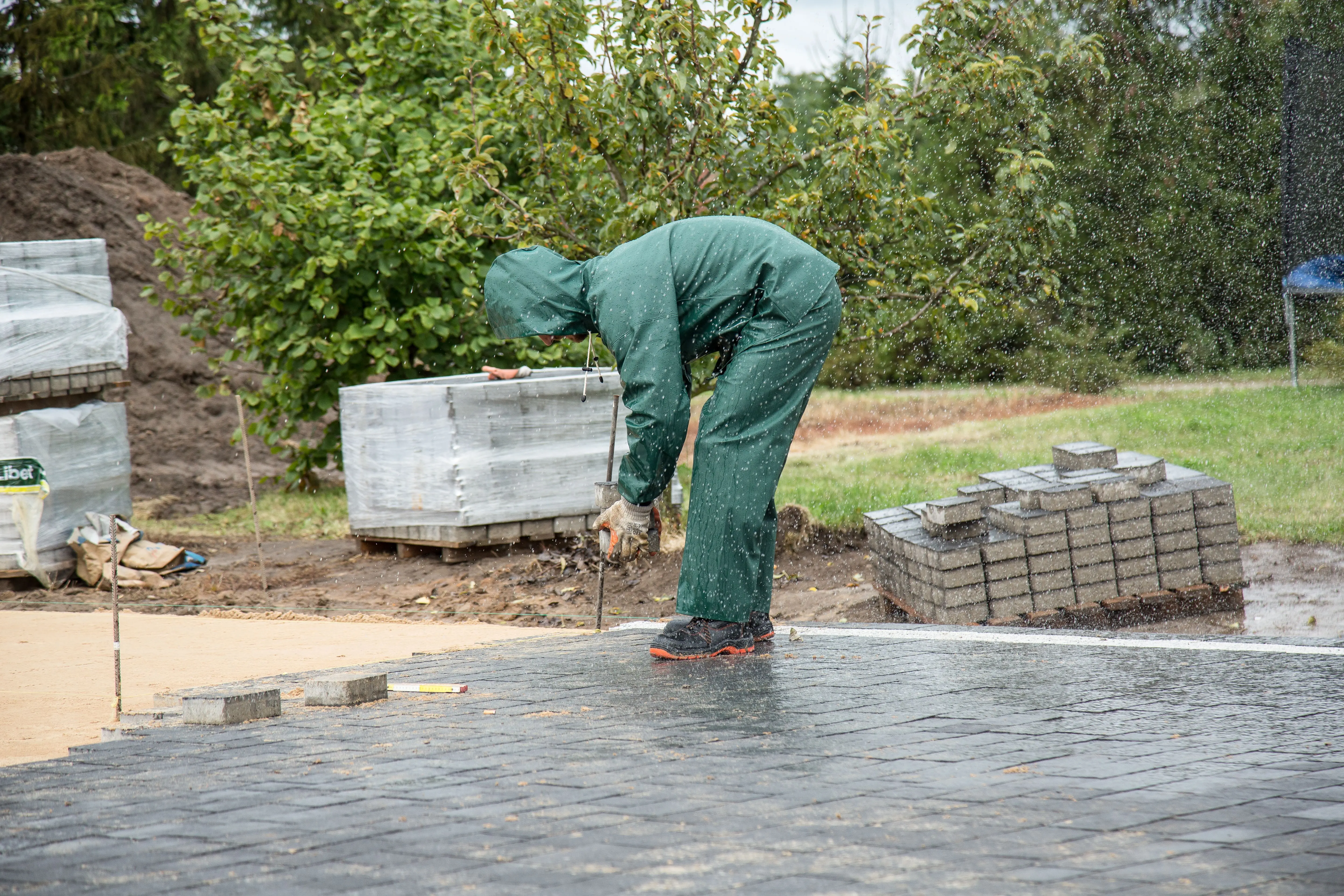
What is under the slabs
A patio fails at the base. Usually a sub-base that was too thin, or a fall that was never set.
- Dug out to depth and the spoil taken away, not spread round the garden
- Compacted hardcore sub-base, depth set by the ground and the use
- A fall of roughly one in eighty, away from the house and the damp course
- Slabs laid on a full mortar bed, so there is no hollow under them
- Joints pointed or brushed, depending on the stone
- Edges restrained so the perimeter does not creep
The choices worth thinking about
Mostly a question of how much maintenance you want to sign up for.
-
Indian sandstone
Warm, riven and forgiving on an uneven line. Wants a wash and occasionally sealing.
-
Porcelain
Dense, colour-stable and close to maintenance free. Needs a primer and a careful hand cutting it.
-
Block paving
Flexible, repairable a block at a time and good where vehicles go over it.
-
Drainage and permeability
Where a patio drains matters more than people expect, and there are rules about paving over front gardens.
-
Steps and levels
Changes in level are where a garden stops looking like a slab yard and starts looking designed.
-
Paths and edges
A path that joins the patio to the shed and the bins in the same material pulls the whole thing together.
Thinking about a new patio?
Rough measurements and a photograph of the space are enough for a sensible first conversation about budget.
Questions about this job
-
A straightforward garden patio is usually a few days once the base is out, depending on size, access and how much digging there is. Where spoil has to be barrowed through a house or a narrow side return, the digging is the slow part rather than the laying.
-
For a back garden patio, almost never. Paving over a front garden is the one to check: more than five square metres of non-permeable surface needs permission unless the water drains to a border or a soakaway rather than the road.
-
Sometimes, if it is sound, level and the finished height will not breach the damp proof course. More often the honest answer is that it is better lifted, because laying on top of a failing base buys you a few years at full price.
-
It goes on the truck. A patio dig produces more than people expect and leaving it heaped at the bottom of the garden is not a finished job.
Other things we do
Most jobs turn out to be more than one of these. Ask for a price on all of it at once.
Timber and composite decking built on a proper frame across Kent, Surrey and Sussex.
Fence panels, closeboard fencing and gates installed across Kent, Surrey and Sussex.
New lawns, turfing and lawn renovation across Kent, Surrey and Sussex.
Garden clearance and green waste removal across Kent, Surrey and Sussex.
New hedging, trees and border planting across Kent, Surrey and Sussex.