Storm damage, made safe first.
A tree that has come down in the night is a different job from one you have been meaning to deal with. The first visit is about making it safe.
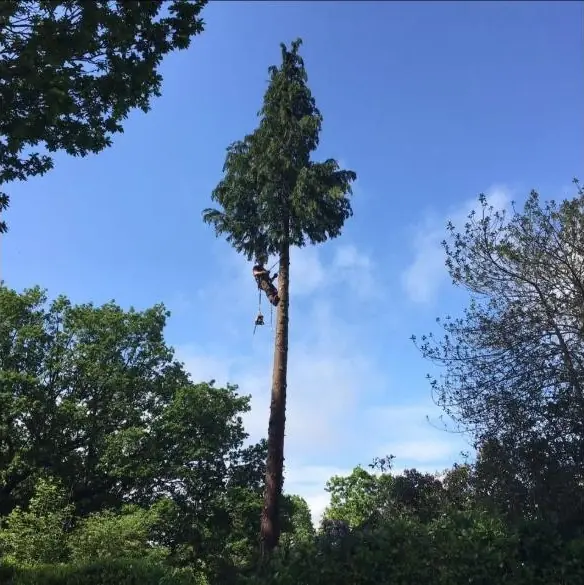
A tree that has come down in the night is a different job from one you have been meaning to deal with. The first visit is about making it safe.
Storm work is unpredictable by definition, so it is priced on what we find rather than from a list.
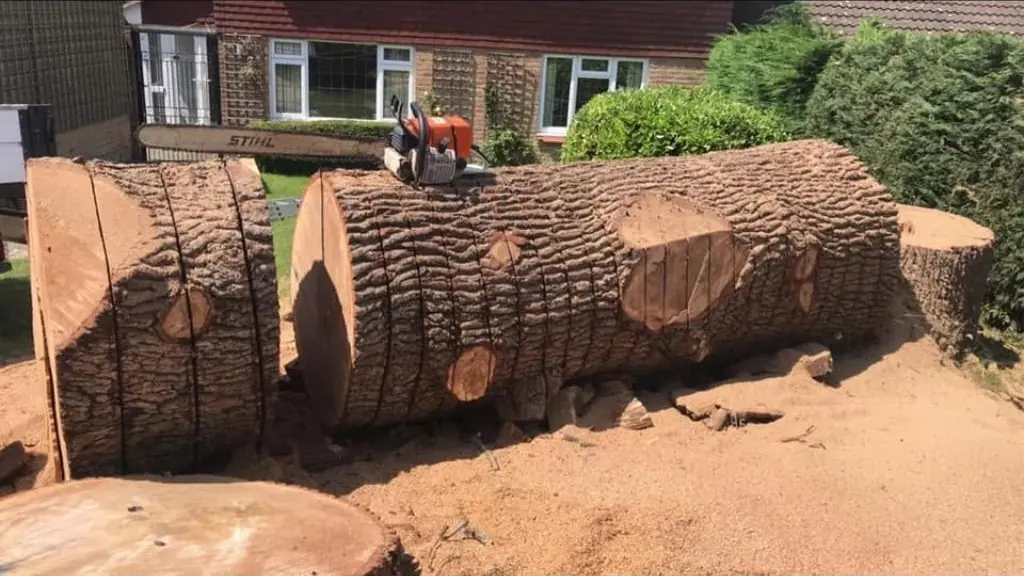
Mostly it is about staying away from it.
A hung-up limb can come down with no warning at all. Rope the area off if you can and keep children and dogs out of it.
A tree on a power line is the network operator's job, not ours. Call 105 and they will attend, free of charge.
Before anything is moved. Insurers ask, and the pictures are easier to take now than to recreate later.
A tree that has lost one limb in a gale often has another one cracked. Worth looking up before you decide it is over.
Whether a truck can get in decides a lot about how quickly it can be cleared.
If it came from next door, the tree is still the owner's responsibility. We can speak to them directly if that is easier.
Ring rather than email. Tell us what it is sitting on and whether anybody has to walk underneath it.
After a big blow everyone is ringing at once, so we prioritise anything that is actually dangerous: a tree on a house, a limb hanging over a path, a stem blocking a road. Tell us what it is threatening and we will give you a straight answer about timing rather than a vague one.
Often, where a tree has damaged a building, a fence or a car. Policies vary and the clearing of the tree itself is treated differently by different insurers. Take photographs before anything is moved and ring your insurer early.
Do not go near it, and do not let anyone else either. Ring 105, which connects you to your local network operator free of charge. They deal with trees on lines and they will attend. Once the line is made safe, we can clear the rest.
Responsibility stays with the owner of the tree. In practice, after a storm, the quickest route is usually a conversation rather than a letter. We are happy to quote to whoever ends up paying.
Most jobs turn out to be more than one of these. Ask for a price on all of it at once.
Qualified tree felling and sectional dismantling across the Kent, Surrey and Sussex borders.
Crown lifting, thinning and deadwooding carried out to the British Standard.
Crown reductions carried out to growth points, not topped.
Hedge cutting, reshaping and height reduction for homes and commercial sites across Kent, Surrey and Sussex.
Stump grinding and removal across Kent, Surrey and Sussex.
Overgrown plot and site clearance for homeowners, builders and landowners across Kent, Surrey and Sussex.