Hedges cut straight, and cleared away.
A hedge cut properly has flat faces, a level top and a slight taper so the bottom still gets light. The cuttings leave with us.
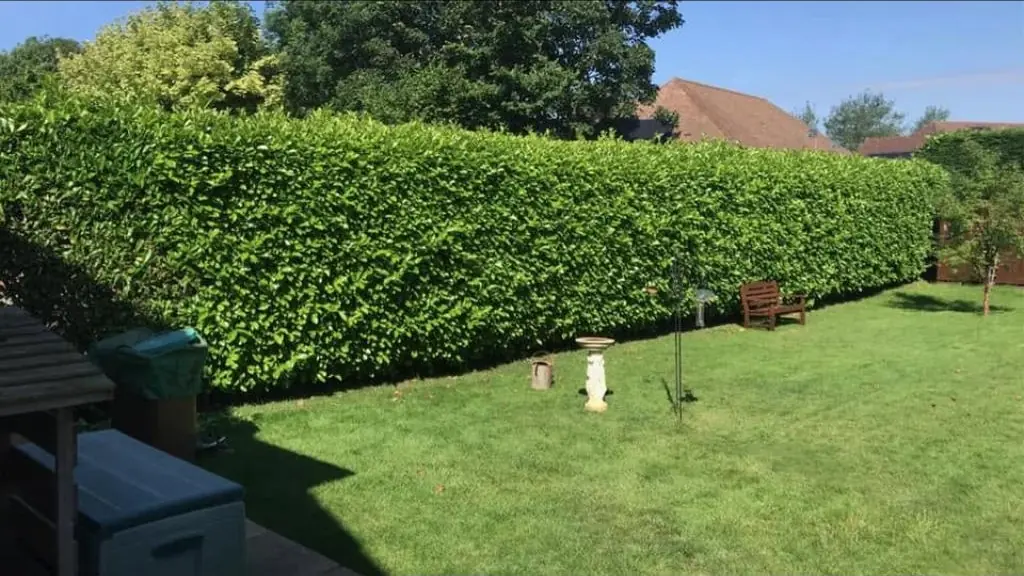
A hedge cut properly has flat faces, a level top and a slight taper so the bottom still gets light. The cuttings leave with us.
Most hedges want two cuts a year. A single annual cut works on slower growers if it is timed right.
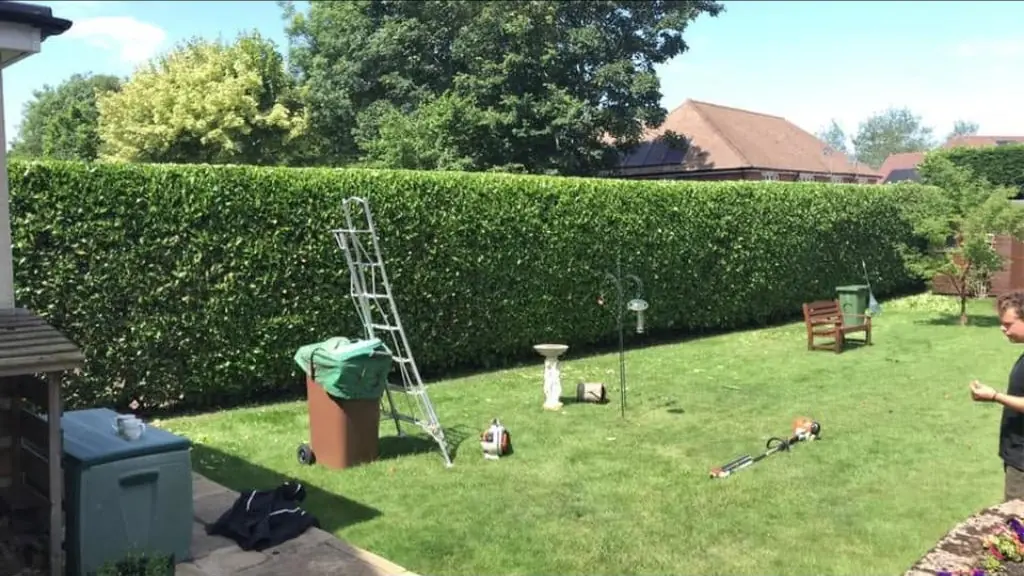
Cutting leylandii like beech is how people end up with a brown wall.
Will not regrow from brown wood. Once it is cut back past the green it stays bare, so reductions are planned carefully.
Take a hard cut and hold their copper leaves through winter. One good cut in late summer is usually enough.
Cut with a blade rather than shredded with a flail, because torn laurel leaves brown off and look burnt.
Fast and forgiving. Two or three light cuts a year keeps the face tight.
Hawthorn, blackthorn and field maple. Cut on a cycle so it keeps its stock-proof density.
Car parks, schools and estate boundaries, priced by the metre and done outside opening hours where needed.
A long overgrown run is a different job from a routine cut, and usually cheaper than people expect. Send a photo along the length of it.
Outside nesting season, which runs roughly March to August, you can cut when you like. Inside it, it is an offence under the Wildlife and Countryside Act to damage an active nest, so a hedge gets looked over before the trimmer starts and work gets left where there is a nest in it. For most garden hedges, late summer into autumn is the straightforward window.
The top, yes. The sides are where people come unstuck. Leylandii and most conifers do not regrow from brown wood, so if a reduction takes the green off a face it stays brown. We will tell you how far in you can go before that happens, and if the honest answer is that the hedge is beyond saving we will say so.
Yes, and off the borders and the lawn as well, not just the obvious pile. It goes through the chipper and leaves on the truck.
Twice a year for fast growers like leylandii and privet, once for beech, hornbeam and most native mixes. We can put you on a cycle so it does not get away again.
Most jobs turn out to be more than one of these. Ask for a price on all of it at once.
Qualified tree felling and sectional dismantling across the Kent, Surrey and Sussex borders.
Crown lifting, thinning and deadwooding carried out to the British Standard.
Crown reductions carried out to growth points, not topped.
Stump grinding and removal across Kent, Surrey and Sussex.
Windblown trees, hung-up limbs and storm damage made safe and cleared across Kent, Surrey and Sussex.
Overgrown plot and site clearance for homeowners, builders and landowners across Kent, Surrey and Sussex.